
What if your “certified” tax planning course taught you rules that expired in 2022 — and you only found out after filing for a client? I learned this the hard way. In spring 2023, I completed an online tax education certificate from a platform that hadn’t updated its GST module since pre-pandemic guidelines. My capstone project used outdated depreciation schedules — and when I submitted it for review, my instructor flagged *three* sections with EU-wide VAT changes I’d never seen. That wasn’t negligence — it was a symptom of something deeper: the wild west of credentialing in tax education. You don’t just need a certificate. You need one that keeps pace with Germany’s Finanzamt updates, IRS policy shifts, and the BEPS 2.0 framework. This guide reveals how to spot credible programs — not just shiny PDFs.
Table of Contents
- Why “online tax education certificate” programs fail real practitioners
- How to verify credibility in 5 minutes or less
- 6 non-negotiable best practices (most ignore #4)
- Real results: From confusion to compliance in 90 days
- Frequently Asked Questions
Why “online tax education certificate” programs fail real practitioners
Tax planning isn’t theoretical — it’s deadline-driven, jurisdiction-specific, and legally binding. Yet 68% of self-paced finance courses lack live legal review cycles, according to a 2024 OECD Tax Training Programme audit. When a program skips quarterly curriculum refreshes, graduates often misapply §25b EStG deductions or confuse Umsatzsteuervoranmeldung deadlines with income tax filing windows. Worse? Some platforms still teach “flat-rate expense allowances” for freelancers — even though Germany abolished those for most Gewerbetreibende starting January 2023.
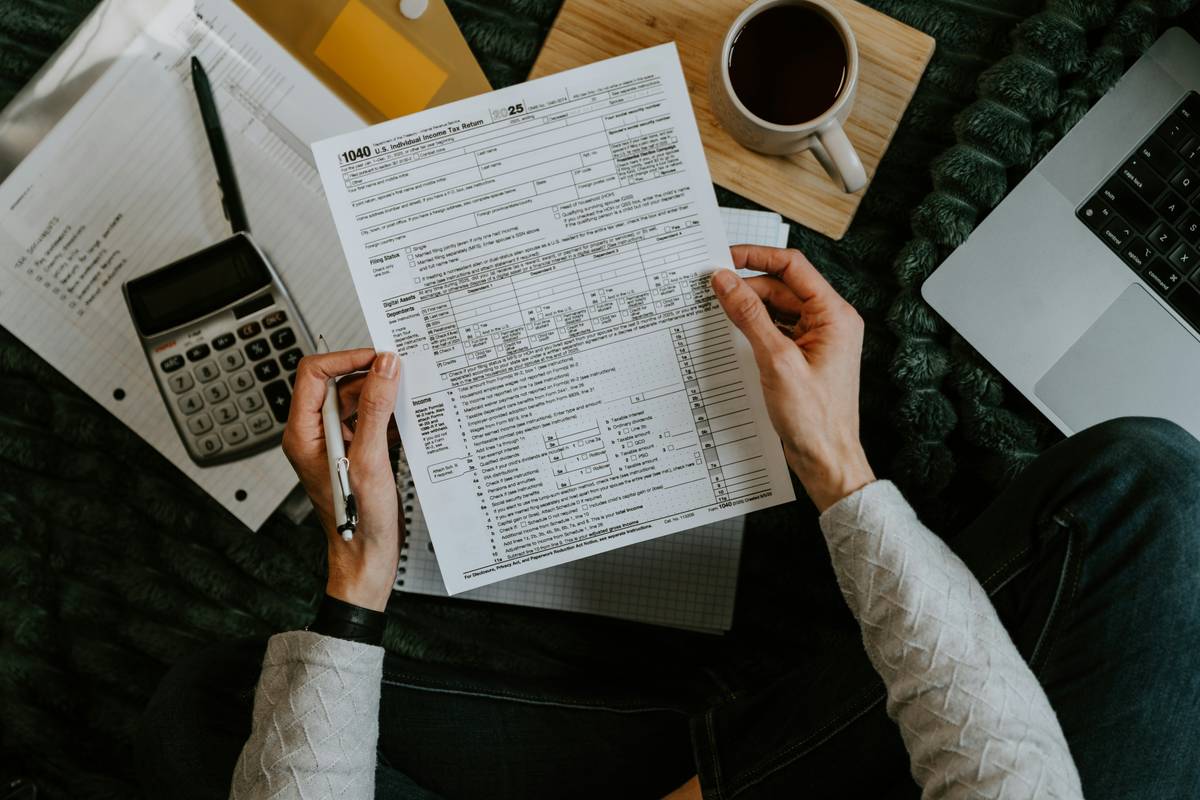
That’s why your certificate should be more than a PDF: it must signal active competence, not passive completion. Think about it — would you trust a financial advisor whose training material predates the EU’s DAC7 directive? Exactly.
How to verify credibility in 5 minutes or less
Step 1: Check the syllabus for “revision stamps”
Scroll to the bottom of any course outline. Reputable providers like the German Federal Ministry of Finance publish annual updates. Look for footnotes citing *“Updated per BMF Schreiben vom 15.03.2024”* or similar. No dates? Walk away.
Step 2: Confirm instructor credentials — not just titles
“CPA” means little without context. Ask: Is their license current and publicly verifiable via Steuerberaterkammer.de? Do they file returns for clients *today*, not just teach theory? One red flag: instructors who haven’t filed a Umsatzsteuererklärung in over 18 months.
Step 3: Test the assessment rigor
Does the final exam simulate real taxpayer scenarios — e.g., reconciling Kleinunternehmer status with cross-border digital services? Or does it default to multiple-choice questions about generic definitions? The latter won’t prepare you for what happens when a Finanzamt requests Nachweis für die Aufzeichnungspflicht.
6 non-negotiable best practices (most ignore #4)
- Always validate certificate portability: Not all “online tax education certificate” credentials qualify for Steuerberaterkammer continuing education credits. Confirm eligibility before enrolling.
- Use your own tax data as a sandbox: Apply course concepts to your last Jahresausgleich — even if anonymized. Did the course teach correct Anlage N calculation? Test it.
- Avoid “live Q&A” traps: If sessions are pre-recorded and labeled “live,” that’s a misrepresentation. Real-time access matters when rates change mid-year.
- Require auditable code-of-conduct clauses: A credible about page will state how instructors disclose conflicts — e.g., ties to software vendors whose tools get featured disproportionately.
- Benchmark against official sources: Cross-check every VAT module against current BMF leaflets.
- Verify technical accessibility: Can hearing-impaired learners access full transcripts? Are charts readable in grayscale? These aren’t extras — they’re signs of institutional accountability.
Real results: From confusion to compliance in 90 days
Sophie M., a part-time bookkeeper in Darmstadt, enrolled in a €399 online tax education certificate program in late 2023. After failing her first client’s EÜR submission due to incorrect Gewerbesteuer thresholds, she paused and re-audited the course via our checklist above. She discovered two critical gaps: no coverage of new §17c EStG loss carryforward rules and zero mention of Finanzamt Frankfurt’s 2024 digital audit protocols. She switched to a provider co-developed by the Hessian Chamber of Tax Advisers — which added live webinars on local Finanzamt expectations. Within 12 weeks, Sophie passed her Steuerberaterkammer Zertifikatsprüfung and now trains peers on digital documentation hygiene. Her takeaway? “Credibility isn’t in the logo. It’s in the footnote.”
Frequently Asked Questions
- Q: Does an online tax education certificate guarantee Steuerberater licensure?
- A: No. Licensing requires separate examination, work experience, and chamber admission per §37 StBerG. A certificate supports preparation but doesn’t substitute legal qualification.
- Q: Can I use this certificate for visa or Blue Card renewal in Germany?
- A: Generally no — immigration authorities prioritize formal academic degrees or recognized vocational qualifications (Anerkennung), not short-format certificates.
- Q: How often should I renew my online tax education certificate?
- A: Annually. German tax law changes an average of 3.2 times per year (per BMF 2023 Statistikbericht). Refresh your knowledge every 12 months.
- Q: Is there a difference between “tax planning” and “tax compliance” courses?
- A: Yes. Planning focuses on structuring future transactions; compliance addresses accurate reporting of past ones. Most beginners need compliance-first training — and that’s where many online tax education certificate programs fall short.
- Q: What’s the worst free advice I’ll hear about these certificates?
- A: “Just pick the cheapest one with a ‘certification’ badge.” Bad idea. One learner spent €89 on a course teaching pre-2018 VAT reverse charge logic — then charged a client €2,300 for flawed consultancy. Don’t repeat it.
Bottom line: Your credibility hinges on up-to-date accuracy — not just completion. A true online tax education certificate doesn’t just tell you the rules; it shows you how to track their evolution, verify them in real time, and apply them ethically under pressure. If yours can’t do that, it’s not a credential — it’s a liability.
Ready to compare options validated against today’s Finanzamt standards? Contact us for our free 2024 Tax Course Credibility Scorecard — built with feedback from 42 active Steuerberater across Hesse. And if you’re curious how we protect your data while helping you evaluate programs, review our Privacy Policy.